Sean McDonald, Connaître l’histoire et la faire vivre
05.10.2026
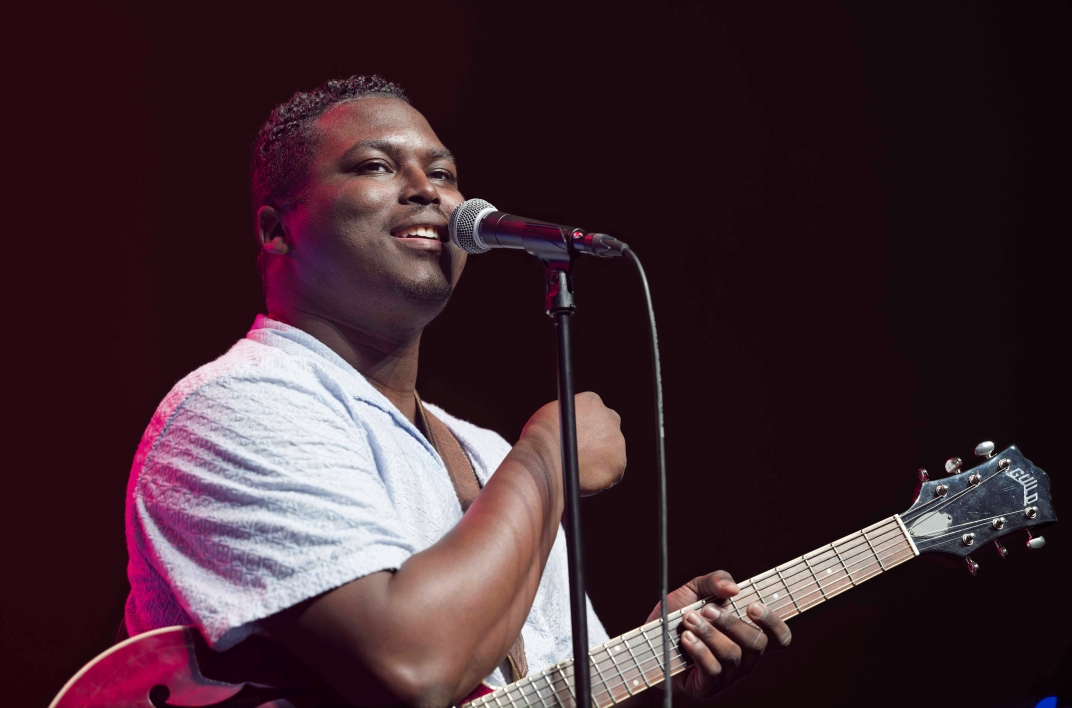
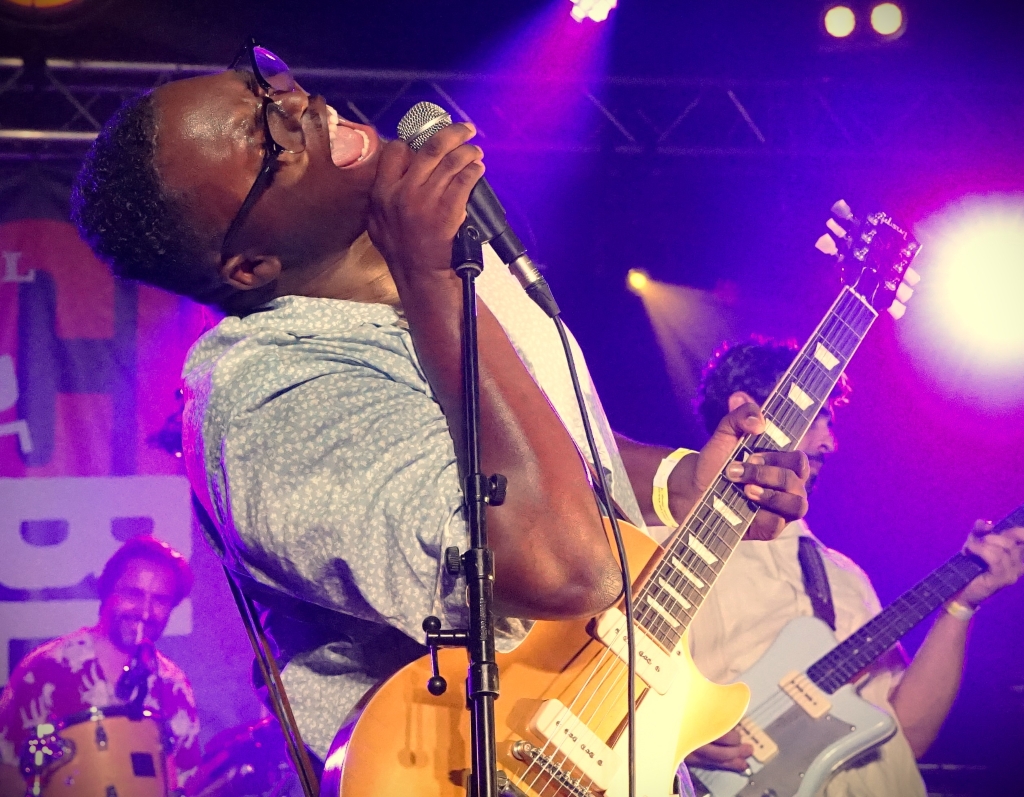
Among the headliners was one of the brightest young talents on today’s blues scene, singer and guitarist Sean McDonald. We met him at his hotel for a fascinating conversation, just a few hours before a concert that would indeed prove to be a fiery one.
You’re performing tonight and tomorrow as part of Les Rendez-Vous de l’Erdre festival. This comes during a particularly busy year for you on the European circuit, with appearances at festivals such as Moulin Blues, Técou en Blues and Vache de Blues. What’s your state of mind going into this weekend, and how do you view your breakthrough in Europe?
At every show, I want to make sure the audience gets a performance that lives up to what they’ve heard on the record and seen in the videos. Although, honestly, nothing compares to experiencing music live, because that’s when it really comes alive. I try to make every show better than the last, even though that isn’t always easy. But I always do my best. My goal is for people to feel my commitment, to understand where I come from, my relationship with music, with its history, and with my own family lineage. I’m not just playing for myself; I’m also playing for those who came before me. I think it’s beautiful that music is a universal language. Wherever you go, people understand it. Even if you’re not singing in their language, music communicates something.
So, I’m simply grateful that people have heard my album, enjoyed it, watched the videos, wanted to come to the shows and bought a ticket. That means a lot to me, because I never thought I would be doing all of this so early. I’m only 25. To have already traveled so much and played at the festivals you mentioned is beyond anything I had imagined.
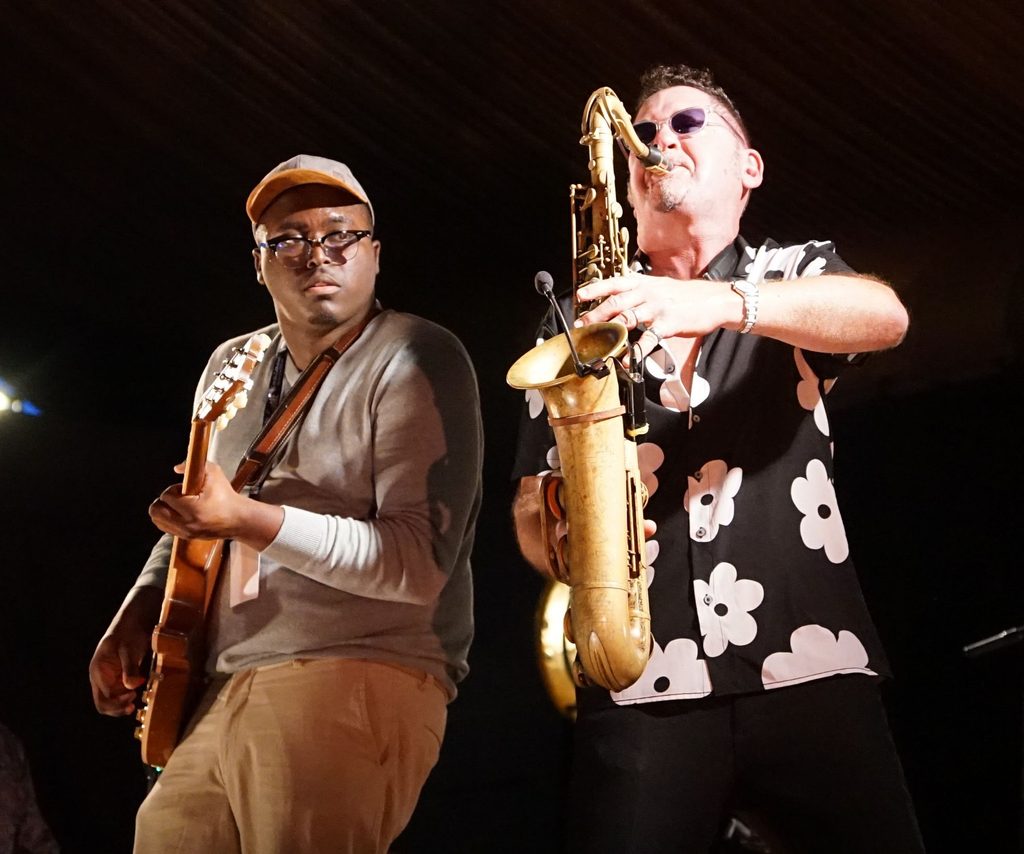
For these two dates, you’ll be joined by the French musicians (1) who usually accompany you on your European tours, but you’ll also be sharing the stage for the first time with a special guest, Sax Gordon Beadle. What can you tell us about that?
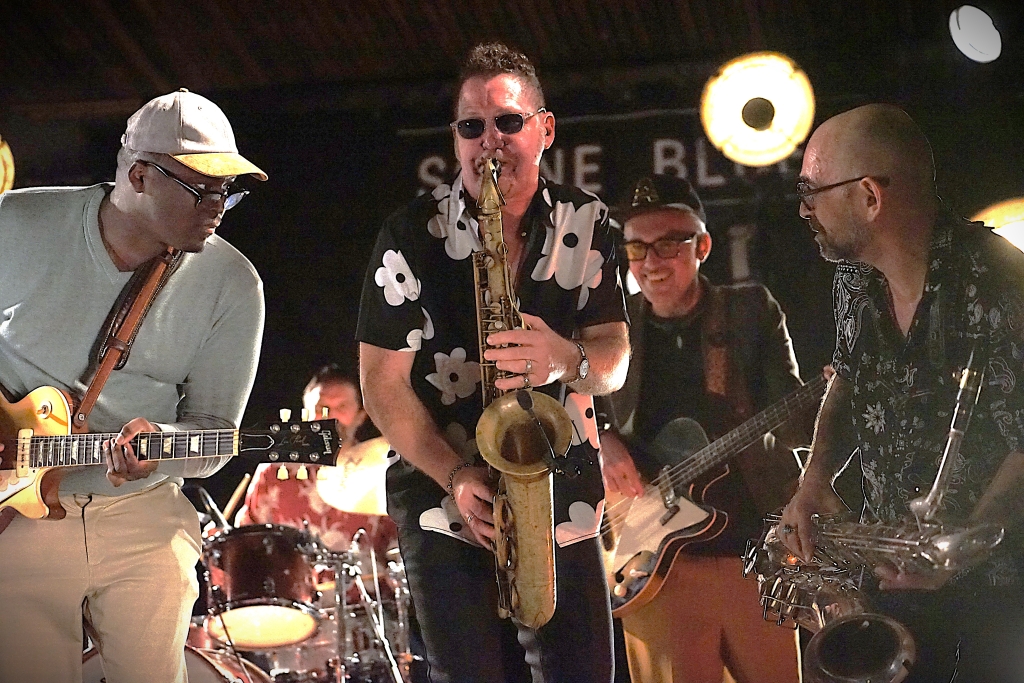
I think Gordon is an incredible musician and an amazing showman. Combining what he brings with everything I bring onstage should make two really great shows. We met last March in Utrecht, in the Netherlands. We were both booked at the festival and had a chance to jam together. When I saw him play, I was immediately struck by his intensity. It reminded me of the raw energy of Big Jay McNeely (2). There’s something very physical about him, almost visceral.
The musicians playing with us tonight are also fantastic. I really enjoy working with them. They study the music deeply and make sure everything is right for my show. They’re very studious, very committed, very attentive, and truly devoted to the music. In the United States, I often play with different lineups because I can’t afford to keep a permanent band together. Maintaining a full-time band is too expensive, and at this point in my career, I’m not in a position to take on that responsibility.
Your growing presence on festival lineups follows your rising reputation as a showman. What does the stage, and playing live, mean to you?
The stage is like my home! It’s a place where I feel comfortable, almost therapeutic. I leave a lot of my problems, stress and worries there. These days, with the increasing number of tours, it can sometimes feel like a job. But as soon as I step onstage, I get that feeling of freedom back. It’s a particular kind of balance, but it’s essential.
This growing recognition also follows the release, in October 2025, of your debut album, Have Mercy! (Little Village Foundation, featured in Soul Bag). With almost a year having passed, what can you tell us about the album?
I’m simply grateful that I was able to make it and that I was surrounded by all the wonderful musicians who took part in it. The idea was to study this music and make it our own, rather than simply functioning as a cover band. Some people reproduce songs note for note, and I understand that approach. But we wanted the covers to sound like originals, or for the originals to feel like covers. With Kid Andersen, June Core, Jim Pugh and Marcel Smith, I had the perfect team to achieve that. I’m genuinely grateful to Jim Pugh and everyone at Little Village for giving me the opportunity to make a record like this at my age.
The covers on your album demonstrate an impressive depth of knowledge. How did you deepen your understanding of the blues, and how do you continue discovering new aspects of this music?
Everybody knows the standards, but I’m more interested in what’s hidden. That’s where you find the treasures. I’m a huge fan of compilation albums that contain songs you don’t necessarily hear very often, forgotten tracks and alternate takes. I’m drawn to obscure songs, forgotten songs, because sometimes they’re the best ones. I think that’s part of my role too: to bring those songs back into the spotlight, to give them a place again. Although, at the end of the day, a good song is a good song, whether it’s famous or not.
I’m drawn to obscure songs, forgotten songs, because sometimes they’re the best ones.
Sean McDonald
Are you working on a new album? If so, where will it be recorded? What direction might it take?
Nothing is really set in stone at the moment. Songwriting is a very instinctive, almost spiritual process that you can’t force. I already have a few songs, but I’d rather let things happen naturally. One thing I do know is that, for the next album, I’d like to include more original material while still maintaining a balance. There’s always pressure after a successful first record, but more than anything, I want to recapture that same sincerity and energy.
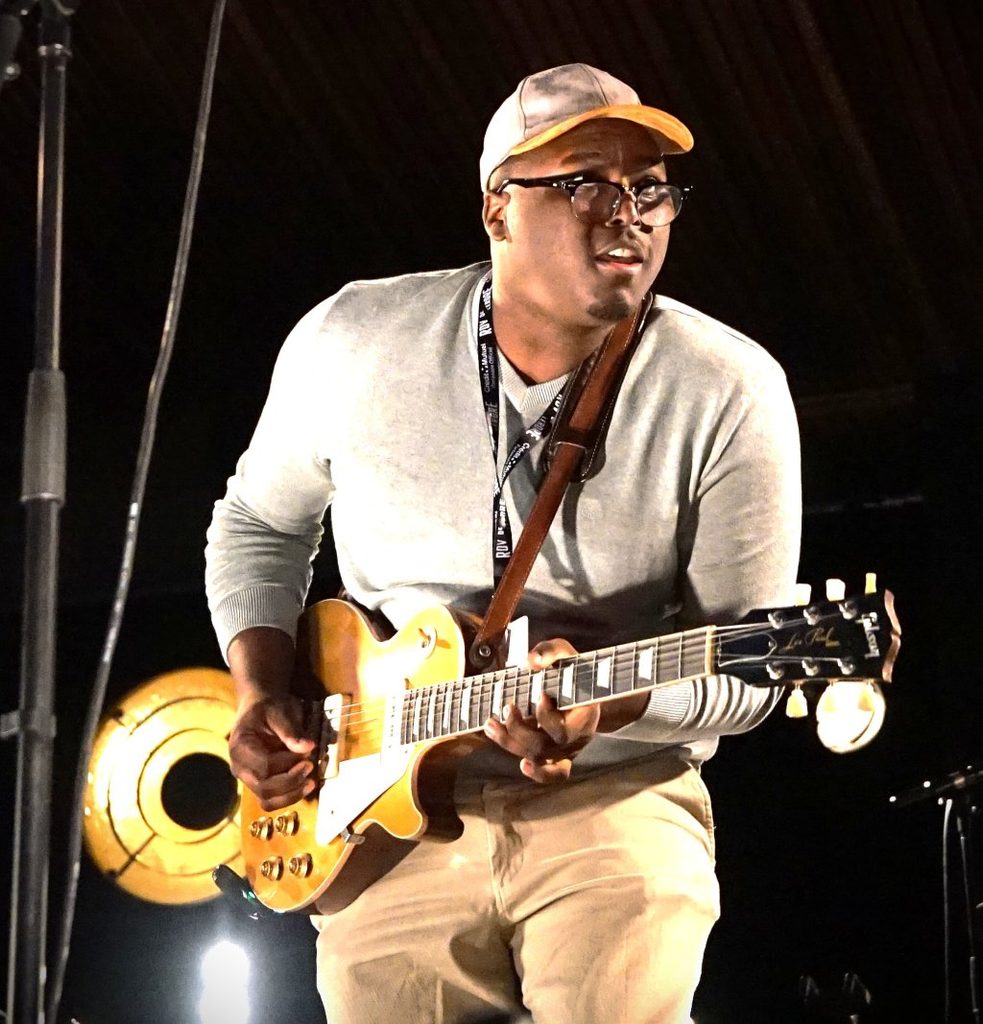
If you don’t mind, let’s take a little time to go back to the beginning. How did you get into music, at what age, and through what path?
My journey didn’t really start with me. It started with my ancestors. Music is an integral part of my family history. Several generations before me were already musicians, particularly in blues and gospel. I grew up immersed in that culture. Some of my ancestors played the blues and then left the juke joints to become deacons in the church. So, they brought what they knew about blues music into the church. With a family lineage like that, I always have to make sure I honor my ancestors. For me, it all started even before I was born. My father played jazz for me while I was still in my mother’s womb. He had already decided that I was going to be exposed to jazz. So when I was born, I was already in love with that music. I was listening to Roy Hargrove at six months old. My father says that when I was a child, I would already be moving to the music in my bedroom.
I had a sense of rhythm very early on. I started playing drums at two, piano at three after seeing Ray, the 2004 film directed by Taylor Hackford, and then I started taking piano lessons at five. I started playing harmonica when I was five or seven, and then guitar around seven. I’ve always wanted to learn. Being born in a city (3) with so many musicians, I was able to see them when I was younger and be influenced by them. Being from the same city as James Brown (4) means a lot to me. I had the opportunity to meet various jazz musicians there, including Wycliffe Gordon. There were also the musicians at my church, some of whom were members of the Swanee Quintet, a gospel group that had in fact inspired Brown. All of those influences have shaped my journey, of course.
You’re still very young and you play the blues. What does this music mean to you, given that it isn’t necessarily the music of your generation?
The blues is my music. It doesn’t matter whether people my age or people from my generation play it or not. It’s my music. If I played jazz or gospel, it would be the same thing, because it’s the music of my people. I consider the forms of music that African American communities have contributed to be mine. So I have a responsibility to play this music. But with the blues, it’s even more direct because members of my family played it. When I took up the mantle, I knew I had to take care of it.
As a musician, whatever music you play, you have a responsibility to respect it, support it and elevate it. For a long time, people have said that young people don’t like the blues. But the blues never disappeared; it simply changed form.
Who have been your main influences?
My influences are many. As I was saying, I started listening to Roy Hargrove when I was very young. At first, I didn’t necessarily think of him as an influence, but his music stayed with me. The two artists who probably meant the most to me are Ray Charles and James Brown. Then Little Richard, Fats Domino, Screamin’ Jay Hawkins… My father introduced me to Screamin’ Jay Hawkins when I was five. Years later, at a summer camp, I discovered that I was learning from his granddaughter, who lived in my hometown and is also incredibly talented. She plays piano and guitar, and you can clearly see the family connection.
I was also heavily influenced by gospel choirs, especially mass choirs, old soul records and all the rhythm and blues I listened to growing up. I’m also interested in everything that influenced hip-hop. I love J Dilla, A Tribe Called Quest, D’Angelo, Erykah Badu, Fela Kuti… I always tell people who ask me how to become a better musician to listen to things outside the genre they play. You have to listen to country, jazz, gospel… Everything is connected!
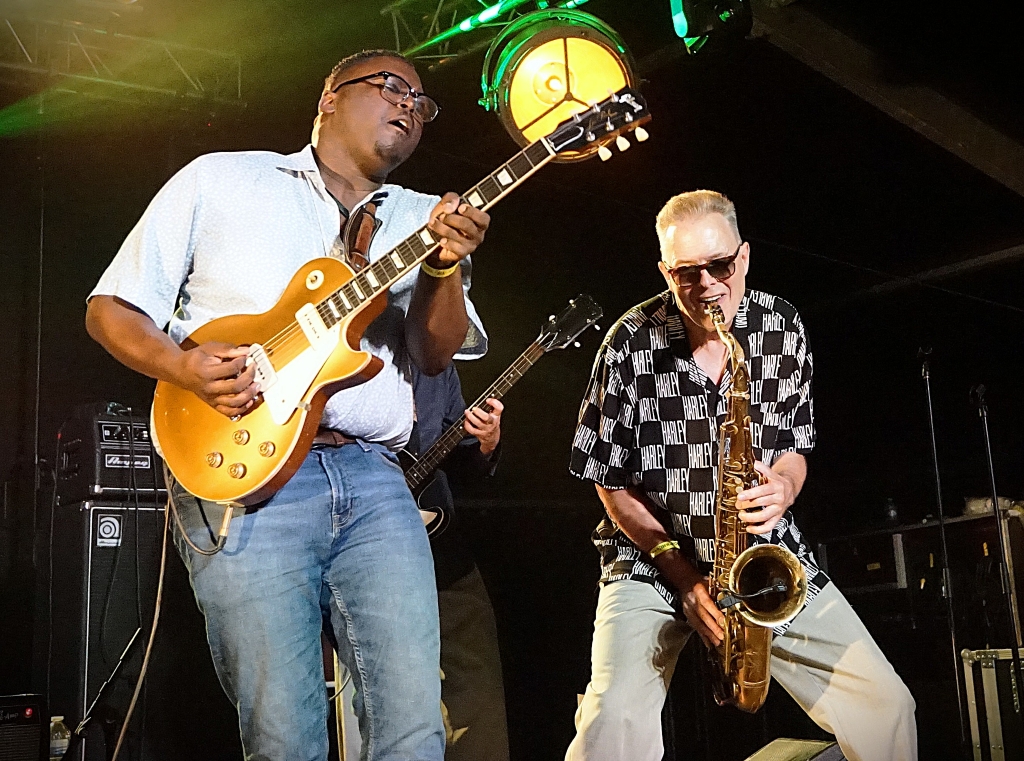
Alongside Jontavious Wills, Christone “Kingfish” Ingram, McKinley James, Jerron Paxton and others, you have undeniably become one of the central figures on today’s blues scene. How do you explain this resurgence among people of your generation? And what kind of relationship do you have with these musicians?
History repeats itself. If you go back a hundred years, there was already a major resurgence of blues musicians, who became increasingly popular over the years. A lot of people, myself included, are tired of hearing that “the blues is dying.” I hate that phrase. The blues isn’t dead; it has simply changed form, as I said earlier. A lot of young people discovered this music and found something in it that touched them deeply. Maybe they also wanted to look beyond what they were hearing on the radio. The blues speaks to me in a way that no other music does. I think a lot of us felt that same thing and said to ourselves, “This is the music we want to play!” And we want to help make it even more popular.
For Black musicians in particular, I think there’s also a responsibility involved. I’m happy to have met people like Jontavious Willis and Kingfish. We’re part of a long tradition, and the blues is at the root of a huge amount of American popular music. We have to know that history and keep it alive. We all have different connections to that tradition. Mine may be more direct because of my family history, but I think we all have a responsibility to support this music. We communicate a lot with the other musicians of my generation. If somebody finds a great record, they share it. Social media makes that much easier.
Of course, we all have our own periods that we’re particularly drawn to. Jontavious is more focused on acoustic blues and older recordings, whereas I’m more into the 1940s to the 1960s, while Dylan Triplett focuses more on the ’60s, ’70s and ’80s. And whenever possible, we get together and play.
We’re part of a long tradition, and the blues is at the root of a huge amount of American popular music. We have to know that history and keep it alive […] we all have a responsibility to support this music.
Sean McDonald
One last question about how you see the future, your ambitions and the projects you have in mind for the years ahead.
I hope I’ll still be alive! (Laughs.) More seriously, I hope to keep playing, to play more and more shows, and to make another record. At the same time, part of me also wants to slow down a little, take some time to live and have fun. Being on tour is hard. The constant traveling around the United States and back and forth between the United States and Europe is exhausting. I wouldn’t rule out going in other directions one day, getting a teaching qualification and becoming a good teacher. I’d like to use what I know to pass on history, for example. I also want to go fishing and have the chance to develop other interests that don’t depend entirely on music. Of course, music is an integral part of who I am, but it’s not everything I am. It’s a part of me, not the whole of me. (He pauses.) African American culture has had an enormous influence on trends, dance and music all over the world. It has helped define a huge part of American popular culture. And yet, playing the blues today and passing this music on feels like a struggle, especially in the United States. People know ZZ Top. They can play wherever they want; they’re legends, and I’m not disputing that. But if more people knew about the young Black artists who are playing this music today, the scene would be very different. I regret that so many young people who look like me forget that this music is theirs too, and that it’s just as relevant today as it was sixty or seventy years ago, when it was popular. A lot of the subjects people were singing about back then are still very relevant today. I hope that one day — and I hope I’m still around to see it! — this battle will be won and more young people, especially young Black people, will take an interest in it. It could change a lot of things…
Interview conducted by Nicolas Deshayes and Jacques Périn on August 29, 2026.
Notes
(1). For these two concerts, Sean McDonald was accompanied by Fabrice Bessouat on drums and as tour manager, Julien Dubois on bass, Cédric Le Goff on keyboards, and Sylvain Tejerizo on saxophone.
(2). Cecil James “Big Jay” McNeely (1927–2018) was one of the most active and spectacular honkers of the 1950s.
(3). Sean McDonald was born in Augusta, Georgia, on July 26, 2001.
(4). Although James Brown was born in Barnwell, South Carolina, he spent most of his youth in Augusta, where his family moved when he was four or five years old.
Live Report Sean McDonald at Técou en Blues 2026
Live Report Sean McDonald at Vache de Blues 2026