Robert Kimbrough Sr. “Mon père ne voulait pas que sa musique meure”
16.11.2026
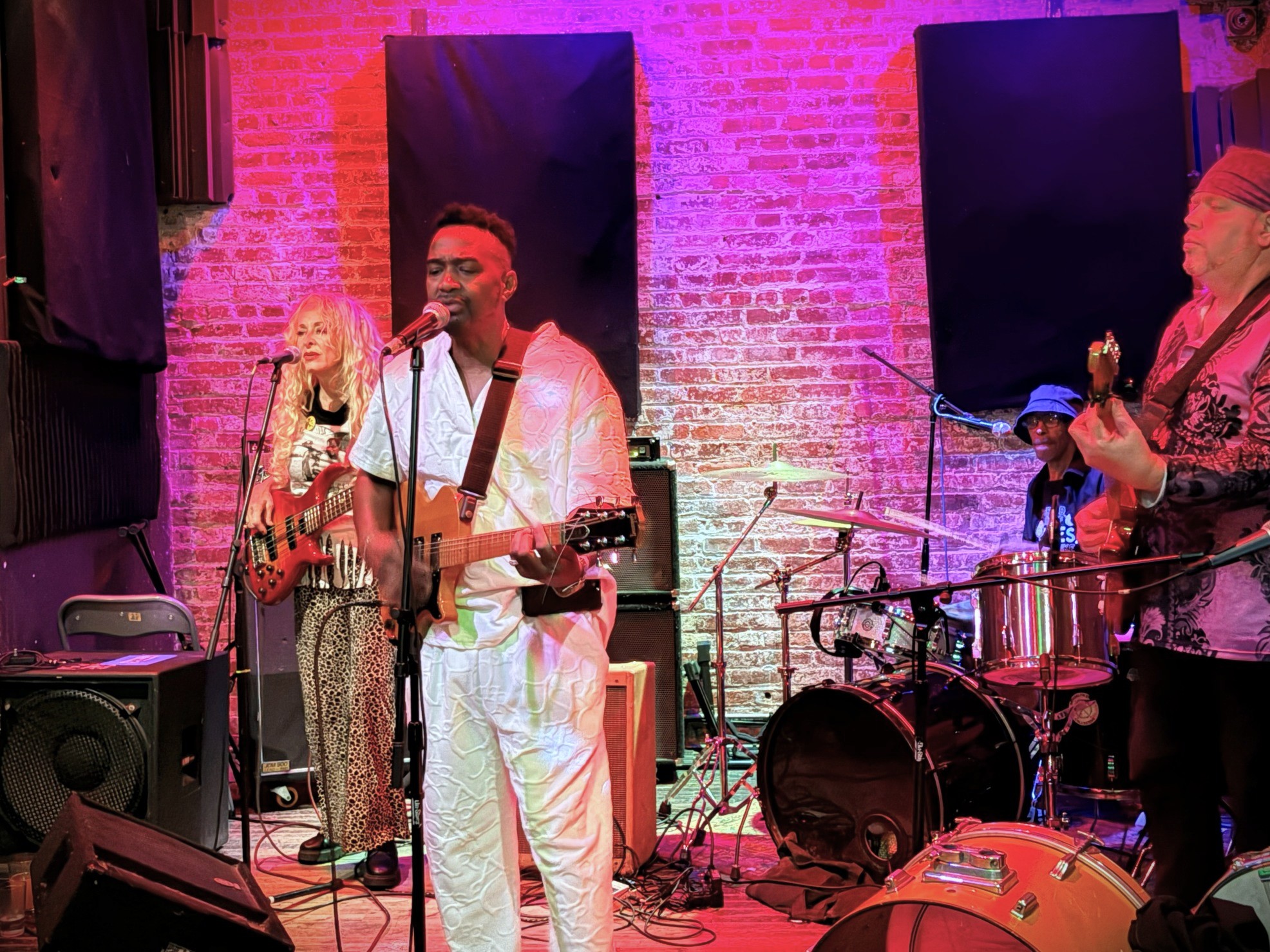
On this October Thursday afternoon, I meet Robert, who has just landed in New York for a couple of shows, including one organized by the Jazz Foundation of America at the National Jazz Museum in Harlem, located on 129th Street, a few blocks away from the legendary Apollo Theater. In a neighborhood where so much of African American music history was made, Robert Kimbrough Sr. is clearly enthusiastic about being able to introduce his musical style to a wider audience beyond his native Mississippi.
ʺIt’s great to be able to bring the style my father created to New York: Cotton Patch Blues, which I also call ‘Cotton Patch Soul-Blues’ ʺ he explains at the beginning of our conversation, before continuing: ʺI want people to hear what’s happening with the
Kimbrough family and to keep this legacy alive. My father and my older brother David
Kimbrough Jr. III are no longer with us. May they rest in peace. ʺ
Inside the small room of the museum, a diverse audience gathers as Robert gets ready to play. Some people are from the neighbourhood, while others have come from elsewhere. One particularly well-dressed man dances, while another plays tambourine at the back of the room, reminding us that music is above all a collective experience.
The band kicks off with an elastic groove, both hypnotic and repetitive, characteristic of North Mississippi blues. Robert’s soulful voice, gentle but marked by the rough edges of life, nevertheless reminds us that the Kimbrough family’s music, known by the enigmatic name of Cotton Patch Soul-Blues, differs from the Hill Country Blues embodied by figures such as R. L. Burnside.
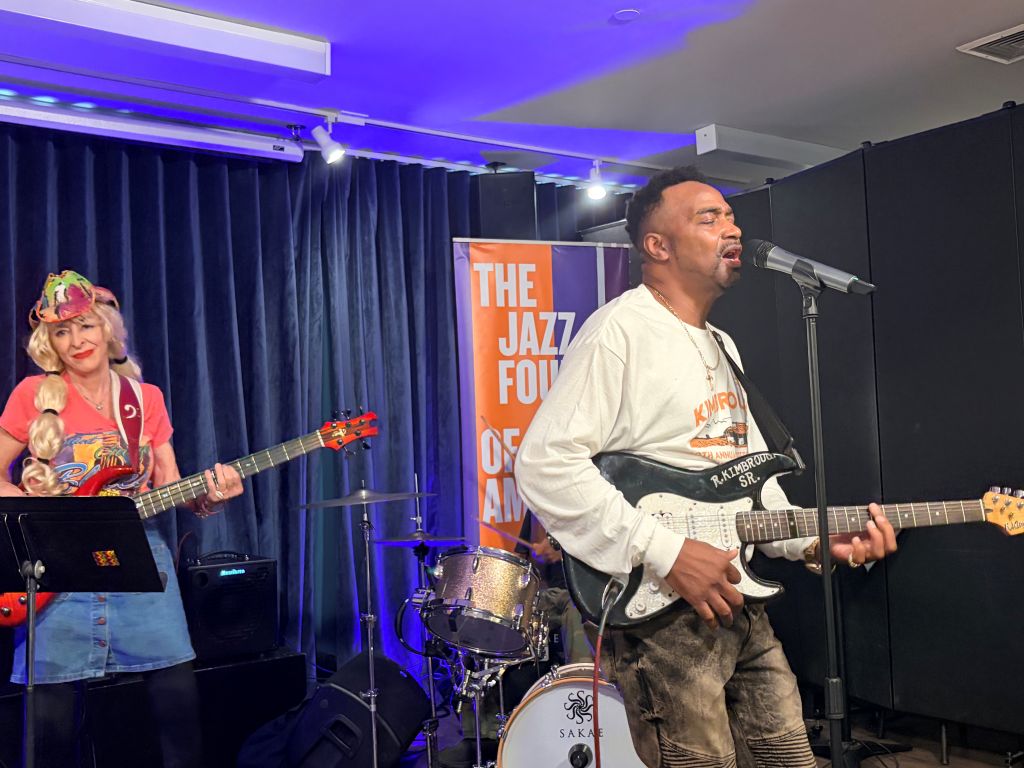
ʺI never really had the chance to sit down with my father and ask him to explain exactly what Cotton Patch Blues was, where it came from, or how it got its name. To me, Cotton Patch Soul-Blues is just soul-blues, like R&B. Hill Country Blues is country blues. That’s the difference. We play soul-blues: we’re soul-blues boys. My brother David Kimbrough Jr. III loved Prince. He would always perform Prince songs, especially Purple Rain. That was one of his favorite songs to sing. I wanted to perform it in honor of my brother.ʺ
In his approach to the blues, Robert Kimbrough Sr., like his father, moves away from the genre’s clichés. The emphasis is on rhythm rather than melody. The songs, often built around a single chord and bordering on trance, create a dusky atmosphere. The almost hip-hop-like drumming also reminds us of the urban influences the music has absorbed. A unique sound that developed around Holly Springs, Mississippi, and whose rhythmic patterns and drone finally share more similarities with West African music than with Chicago blues.
The idea that Manding music is one of the blueprints of the blues, unconsciously passed down through generations by Africans deported to the Americas, seems plausible when listening to griots such as Banzumana Sissoko, a ngoni player born in 1890 in Ségou, the former capital of the Bambara Kingdom. This connection is also explored by the band Afrissippi, which features Kinney, one of Robert’s brothers. Their track Nduumandii has a strong resemblance to the Kimbrough family’s music.
To me, Cotton Patch Soul-Blues is just soul-blues, like R&B. Hill Country Blues is country blues.
Robert Kimbrough Sr.
Although Cotton Patch Soul-Blues gained recognition through Robert Palmer and Robert Mugge’s documentary Deep Blues, as well as through the Black Keys’ album “Chulahoma”, its survival remains uncertain.
ʺI’m practically the only one still playing this Cotton Patch Soul-Blues, apart from one of my students, Ryan Washington. He studied with me and he plays this style too. So, there are a few of us carrying on this traditionʺ he tells me, with no small amount of pride, but also with humility. ʺI hope there will be more of us, and that other people will want to join us. This is a style my father created, not something I made up. It’s documented in recordings and interviews. ʺ
At the end of our brief interview, I suggest meeting again three days later at his show at The Gutter, a bowling alley in Brooklyn with a small room at the back of the building that feels like a juke joint. The event, organized by Amy Verdon, is called Big Blues Mane Extravaganza and was created to honour R. L. Boyce, another blues figure associated with the Kimbrough family. It is an opportunity to enjoy a lineup featuring, among others, Harlem Slim, Lightnin’ Malcolm, Howlin’ Hurd, and Shardé Thomas, granddaughter of Otha Turner and a member of Rising Stars of Fife and Drums. A dedicated advocate of fife and drums, one of the most original forms of blues.
In a different context from the museum, Robert’s Cotton Patch Soul-Blues can finally take its true form. The songs stretch out, people dance, and the evening seems to reach its peak when the band plays All Night Long, one of his father’s signature songs. Time seems to stand still, and Robert appears delighted by the connection he has established with an attentive audience.
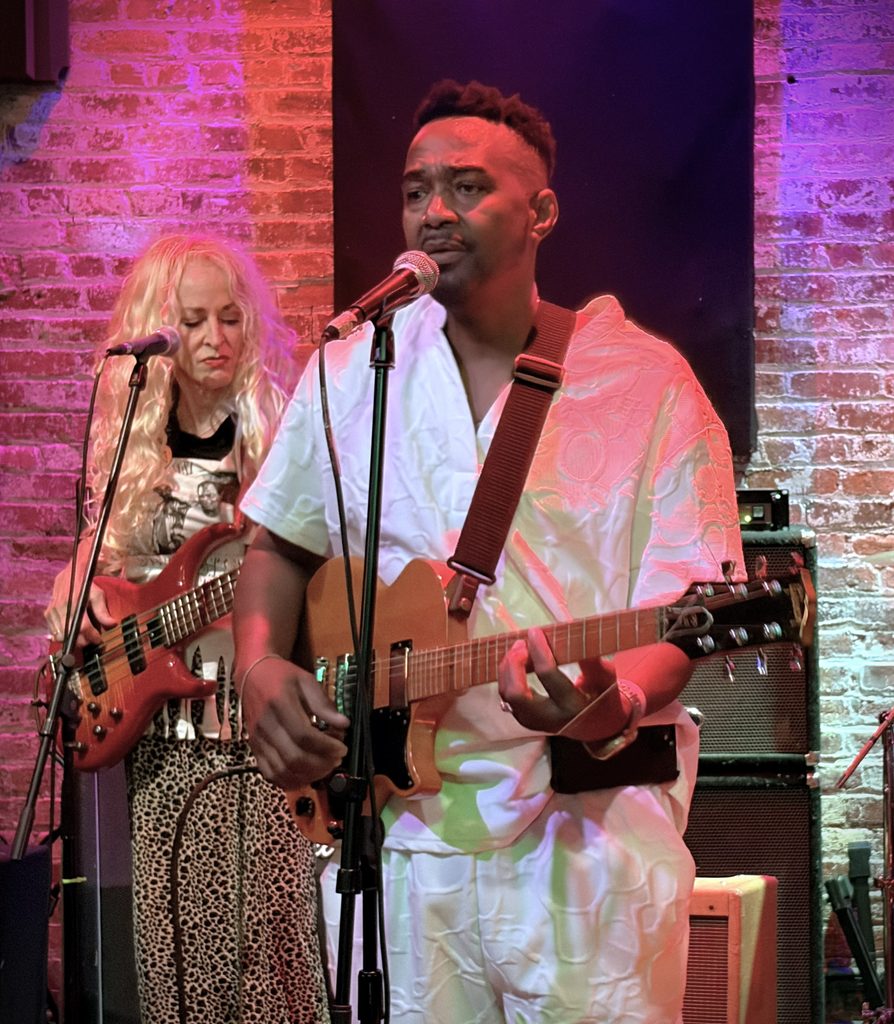
« I’m really happy to keep my father’s legacy alive, because that’s what he wanted. He didn’t want his music to die. He didn’t want his style of blues to disappear. »
Kimbrough Sr. is not simply passing down and preserving his family’s legacy.
Approaching his 60th birthday, he is also looking toward the future, with new projects in the works:
« My latest album is called “Memories”. I have two more albums that I’m getting ready to release. I don’t know exactly when they’ll come out yet, but I hope to put one out by December, and then the other in 2027. »
Far from the clichés associated with the blues, Robert is rational about the realities of being a musician today and is working relentlessly to preserve this culture.
« Right now, I don’t have any international tours planned. After New York, I have shows in Washington, D.C., then Missoula and Hollywood. I have a few shows lined up, but I’m looking for more. I handle my own booking. People call me to offer shows, but I don’t have a booking agent at the moment. I hope someone will eventually get in touch and offer to handle that for me. That way, I can focus on the studio, put my projects together, and devote more time to my music. »
Text and photos by Arthur Chanoine-Degruelle on October 2026, 9th.
Photos : © Arthur Chanoine-Degruelle