Matthew Stubbs (GA-20) et Charlie Musselwhite, Le blues aujourd’hui
13.10.2026

Charlie and Matthew, we all know about the musical and personal bond you share. How did this latest collaboration come about? And why now?
Matthew Stubbs: Charlie was already featured on GA-20’s first single, so making a full album together had always been something I really wanted to do. The idea had been floating around for a few years, but for one reason or another, it never quite happened. Then everything just fell into place, and we realized the time was right for the four of us to go into the studio together.
Charlie Musselwhite: It took a little while to actually make it happen, that’s true, but once we did, everything came together pretty easily because we love the same music and we have a lot of fun playing together. There’s really no mystery to it!
How did that long-standing relationship shape the way you approached this collaboration?
M.S.: We definitely have a history with Charlie. I’ve played with him more than with any other musician over the course of my career, so there was a real ease to the whole thing. There was no pressure at all. From a production standpoint, the goal was to make an album that stayed true to GA-20’s identity while bringing in Charlie’s voice and harmonica and making sure everything worked together as a whole. Like Charlie said, it all came together very naturally.
I’ve played with [Charlie] more than with any other musician over the course of my career, so there was a real ease to the whole thing. From a production standpoint, the goal was to make an album that stayed true to GA-20’s identity while bringing in Charlie’s voice and harmonica and making sure everything worked together as a whole
Matthew Stubbs
As an expression of your shared love of the blues, Blues Now is made up mostly of songs from the golden age of Chicago blues. How did you go about choosing the material?
M.S.: I put together a playlist and we kept adding to it over time. I was mainly looking for songs by artists like Jimmy Reed, Earl Hooker and Buddy Guy, artists Charlie had a particular connection with and had actually known when he was living in Chicago back in the ’60s.
C.M.: We were constantly going back and forth, sharing ideas, and I can tell you, it was a hell of a lot of fun!
M.S.: We spent six days in the studio, which is unusually long for GA-20 (laughs). Normally, we spend two or three days at most. We recorded 18 songs and ended up keeping ten. Some of the others may come out later as bonus tracks. We recorded three or four songs a day, which is pretty fast by today’s standards, even though I know we’re nowhere near the pace of Stand Back!, Charlie’s first album…
C.M.: That’s for sure! For Stand Back!, Sam Charters gave us three hours to record it, and we did it!
Knowing how accomplished you both are as songwriters, it might seem surprising that you chose to focus mainly on other people’s songs.
M.S.: Blues Now only has one original song, actually: “Strange Land,” which Charlie wrote and which originally appeared on Stand Back! Charlie is based in Clarksdale, Mississippi, and we’re based in Providence, Rhode Island, so getting together for writing sessions wasn’t exactly easy. And besides, taking other people’s songs and putting your own spin on them has always been part of the blues tradition. So the idea wasn’t really to sit down and write songs. It was more about playing songs we love, songs that mean something to us. That’s why I see Blues Now more as a collection of traditional blues songs than as a covers album.
Charlie, we’ve already mentioned your legendary album Stand Back!, which came out nearly sixty years ago. It seems to have been an important starting point for this album. What did you want to bring back from the spirit of that record? What did you both hear in it that you wanted to carry forward or recapture in 2026?
C.M.: To me, the energy is pretty similar. In both cases, you’ve got guys who really love the blues and want to put their own spin on it in an honest, genuine way. There’s nothing overly sophisticated about it, but there’s a lot of spontaneity, joy and passion. I think you can really feel that energy in both albums.
M.S.: Like I said, I’ve been playing with Charlie for years, and we’ve developed a really strong relationship, both musically and as friends. Cody Nilsen and Josh Kiggans, our singer-guitarist and drummer, joined GA-20 in 2024 and obviously didn’t have that same history with Charlie. But it became clear very quickly that it was going to work.
Charlie arrived a day or two before the recording session. We got together in our rehearsal studio and went back over the 18 songs we’d selected, figuring out who would take which solos and so on. “Big Stars Falling” needed a little extra attention because Charlie and Cody sing it together, but even that came together very naturally and spontaneously.
C.M.: After three days, it felt like we’d been playing together for decades! I think the album really captures that.
GA-20 is also known for not usually having a bass player. Yet Marty Ballou plays bass on five tracks here. Why did you change your usual approach?
M.S.: The idea is always to make the best choice for the song. If a song needs bass, we use bass. That was the case, for example, on “Christo Redentor,” one of the most iconic songs in Charlie’s repertoire.
When we started the band in 2018, we didn’t have a bass player because the first gigs we were getting around the Boston area simply didn’t pay enough to support four musicians properly. And since the three-piece setup worked, we stuck with it.
C.M.: You know, when I was playing in Chicago in the early ’60s, it wasn’t unusual for blues bands not to have a bass player. The second guitar would cover that part. So going back to that kind of setup with GA-20 immediately took me back to that time and reminded me of the gigs I used to play with Johnny Young and J.B. Hutto.
M.S.: A lot of people ask me why the band doesn’t have a bass player. I always point them toward all those great Chicago blues recordings from that era where there isn’t a bass player. You hear it with Jimmy Reed, Hound Dog Taylor, and on a lot of Little Walter’s recordings with The Aces.
Matthew, how did having Charlie in the band change the way GA-20 plays?
M.S.: To be honest, it didn’t change that much, although a few songs required us to spend a little more time working out the arrangements. For example, the original version of “Crazy Love” doesn’t have harmonica—it has saxophone—so Charlie took that as his starting point and developed his own part around it.
Charlie, after more than sixty years of playing, what can still surprise you when you walk into a studio with young musicians?
C.M.: It’s exciting to see how alive the blues is. I’m playing with guys who are young enough to be my grandchildren, and they love the same music I do. They understand all the subtleties. I see myself in them at that age.
We speak the same language. We hear the same things, we’re working toward the same goal, and it all happens naturally. It’s really great to be able to share this music and play it together.
Matthew, what did you learn from these sessions with Charlie?
M.S.: Believe it or not, this was only my second studio session with Charlie. Other than his last album, almost everything I’d recorded with him before this had been live.
I’m always blown away by the stories he tells us. Back in the ’60s, Charlie was right there alongside all these legends whose songs we covered on this session, but unfortunately, we never got to see any of them play live.
Just imagine: you’re getting ready to record a John Lee Hooker song, and Charlie tells you that John Lee Hooker was his best man at his wedding! That led us to regularly post videos on social media where Charlie would share some of these incredible stories with us. The response has been really positive.
C.M.: Passing those stories down is important to me. They tell us a lot about what the blues is all about. There are some stories I can’t tell, of course (laughs), but there are also so many great ones that I’m always happy to share.

The title Blues Now suggests that the blues isn’t just a music of the past. What does “the blues now” really mean to you?
C.M.: The blues is alive and well! A lot of styles of music come and go, but the blues has always been there, and it’s going to keep going because there’s a substance and a depth to this music that you just don’t find anywhere else.
It’s almost like a religion. The people who play this music form a kind of brotherhood, and the bonds between them are incredibly strong. The blues speaks to everybody. It’s a lesson in life.
M.S.: I think it’s really encouraging that so many young artists, like Jontavious Willis, Jerron Paxton and many others, are going back to the traditional forms of the blues.
C.M.: I’d also mention Harrell Davenport, who’s a good friend of mine. He lives near me and we see each other pretty often. He’s really understood what the blues is all about. He’s got the essence of it, all the nuances. He does the music justice. He’s a great harmonica player and guitarist, the exact opposite of those guitar players who fire off thousands of notes and remind me of people who talk a lot but don’t really have anything to say (laughs).
It’s inspiring to see and feel that the blues is in good hands.
The blues is alive and well! A lot of styles of music come and go, but the blues has always been there, and it’s going to keep going because there’s a substance and a depth to this music that you just don’t find anywhere else.
Charlie Musselwhite
Is Blues Now simply another chapter in each of your musical careers, or does it mark the beginning of a new story you’ll be writing together? What can we expect next?
M.S.: The response to the album has been really great. We already have some shows confirmed for 2027, including festivals. Hopefully, we’ll get some opportunities in Europe.
As for another album, we haven’t really talked about it, but anything’s possible! One thing we do know is that GA-20 will be going into the studio in February to record a new album.
C.M.: Nothing’s confirmed for Europe yet, but our agents are working on it. I did play one show in Spain this summer, but it’s been a while since I’ve had the chance to tour overseas. I think the last time was with Ben Harper in 2018. I’d really love to get back over there!
M.S.: Our schedules have to line up, but I’m really hopeful we can make it happen! In the meantime, GA-20 is really excited to be heading back to Paris. We’ll be playing the New Morning on October 30, the final date of our fall tour.
Interview conducted on 2026, September 30th by Nicolas Deshayes
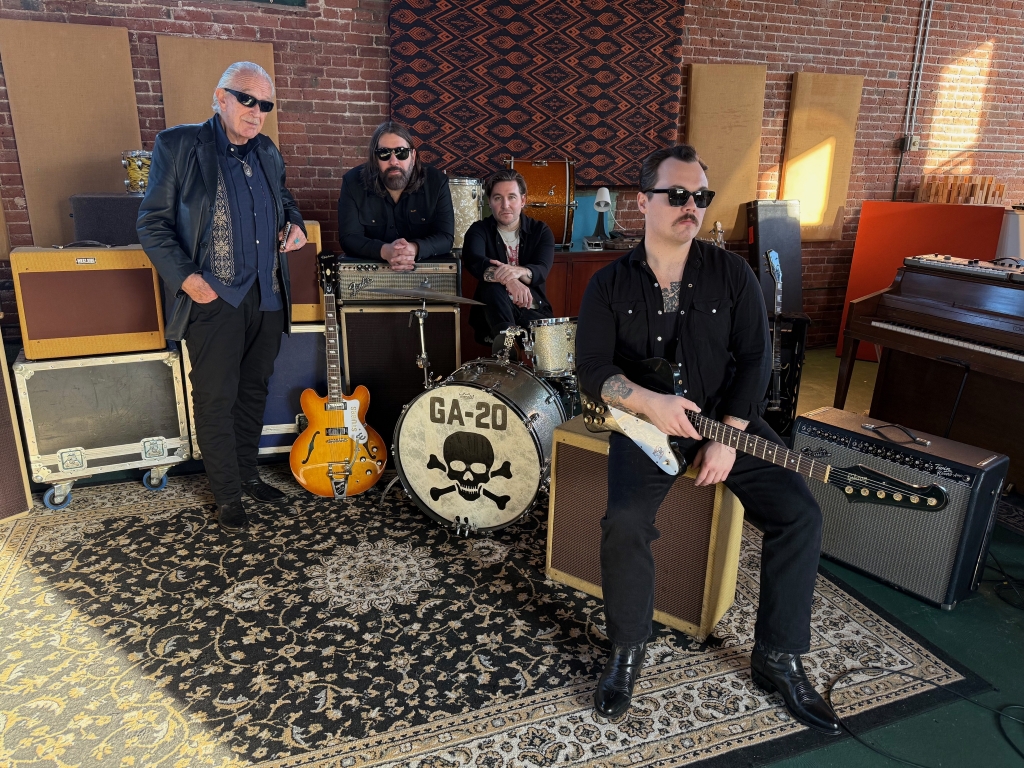
Opening photo : Josh Kiggans, Cody Nilsen, Matthew Stubbs, Charlie Musselwhite © Elizabeth Ellenwood
Review of GA-20 with Charlie Musselwhite, Blues Now
Footnotes
1. “Naggin’ on My Mind,” initially released digitally in December 2018.
2. Charlie Musselwhite arrived in Chicago in 1962 at the age of 18. Five years later, he recorded and released his first album under his own name, Stand Back! Here Comes Charley Musselwhite’s South Side Band, on the Vanguard label. Produced by Sam Charters, who had launched the Chicago/The Blues Today! series, and Barry Goldberg, who hoped to establish Musselwhite as a rival to Paul Butterfield, Stand Back! was a major success and quickly became a classic. Drummer Fred Below and guitarist Harvey Mandel were among the musicians accompanying the Kosciusko, Mississippi native on the album.
3. The highly recommended Look Out Highway, released in 2025 on Forty Below Records.
4. A single appearance at the BluesCazorla Festival.