DD Rey, Le blues à nu
20.10.2026
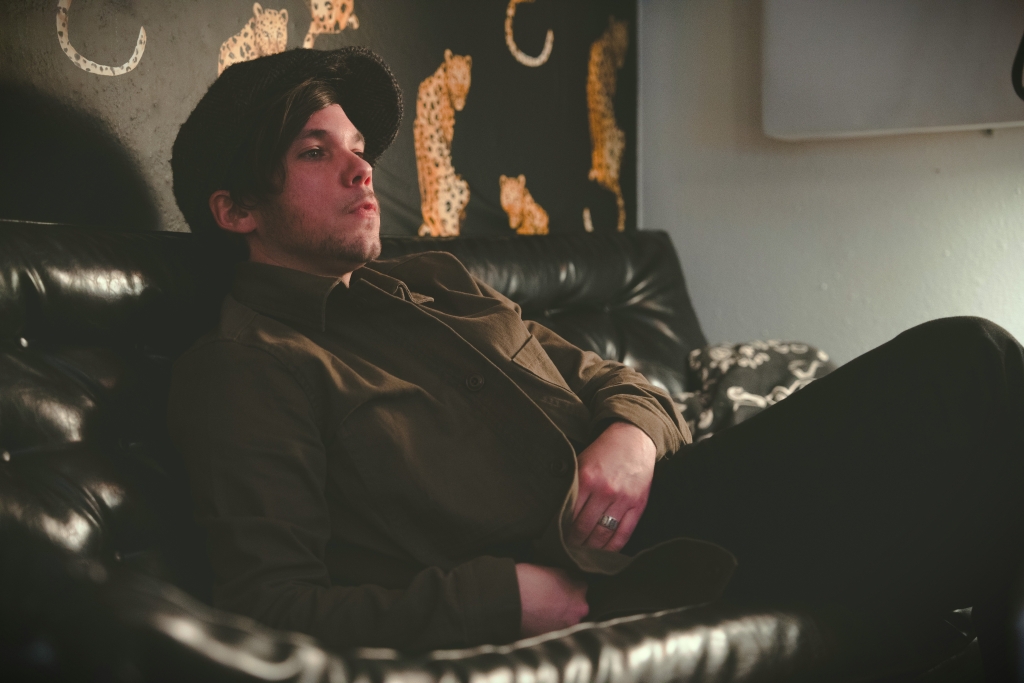
With ″Outsider″, his third album, Tiwayo returns to the blues and Southern soul that shaped him. Recorded in Austin, Texas, under the guidance of producer-guitarist Adrian Quesada, and carried by magnificent songs and a deeply human performance, this album of transmission and reclamation marks a new beginning. A conversation with a musician drawn to encounters and experiences, in search of his own truth.
His debut album, ″The Gipsy Soul Of…″, released in 2019 on Blue Note, was a revelation. Its successor, ″Desert Dream″, issued four years later, confirmed that first impression. With ″Outsider″, newly released on Record Kicks and awarded a Pied in our pages, Tiwayo brings his triptych to a masterful close. Without losing any of the qualities that made us fall for his music from the outset — finesse, authenticity, emotion, vocal power and songwriting — he reaches a new level of maturity. As if he were finally allowing himself to be entirely himself.
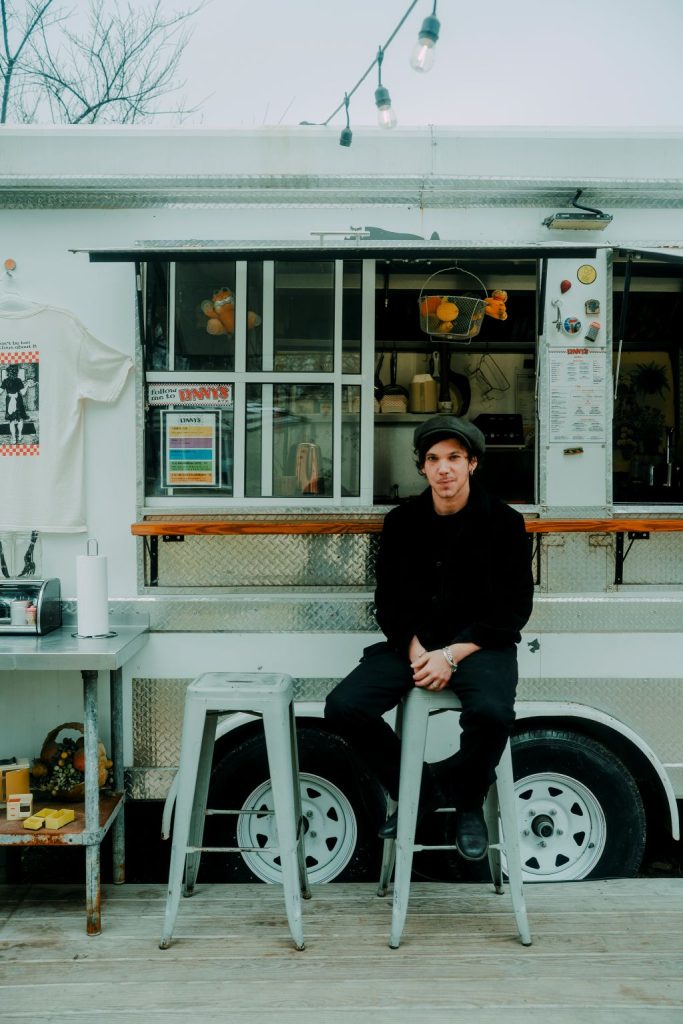
We met him in his home studio, the ideal setting for a passionate, thoughtful artist whose face lights up with a broad smile whenever he talks about the musicians he admires or the people he loves. Around him: guitars within reach, records everywhere and, prominently displayed, the cover of ″West Side Soul″. As if Magic Sam’s tutelary presence were watching over his creative world, soothing the torments of a musician whose doubts feed a reservoir of emotions and songs beautiful enough to break your heart.
You grew up in a home where music played an important role. What are your earliest memories?
I inherited a great deal of music from my parents. My father was a huge jazz and blues fan, an early aficionado who had seen some very big names in Paris in the 1950s and 1960s. So I grew up with that constant presence at home. It was something I absorbed from a very young age. On the other hand, I came to playing music fairly late, around 16, learning by doing, starting with the guitar. Singing came later, much more tentatively. I didn’t really start singing until I was about 22, even though I had wanted to write songs from fairly early on.
So guitar came before the voice. What about your first influences?
At home there was a lot of blues and jazz, major classics like John Lee Hooker. But when I started playing, the popular music of my teenage years was reggae. So I played guitar in quite a few reggae bands in Paris, with musicians from a range of backgrounds. Then, around 20, I came into more direct contact with blues and soul. That’s when my special relationship with this music began, along with my first trip to the United States.
Did you go there on your own?
Yes. I had learned music outside of school, by playing in bands and keeping that passionate, slightly raw relationship to it. I wanted to get closer to the music I had always heard. I was 20 or 21. I set out on the blues trail: New York, Chicago, Nashville, Memphis, New Orleans… In Memphis, I went to see Al Green at his church. That trip is also where my stage name was born: a musician nicknamed me “The Young Old.” I kept the initials, T.Y.O., which became Tiwayo.
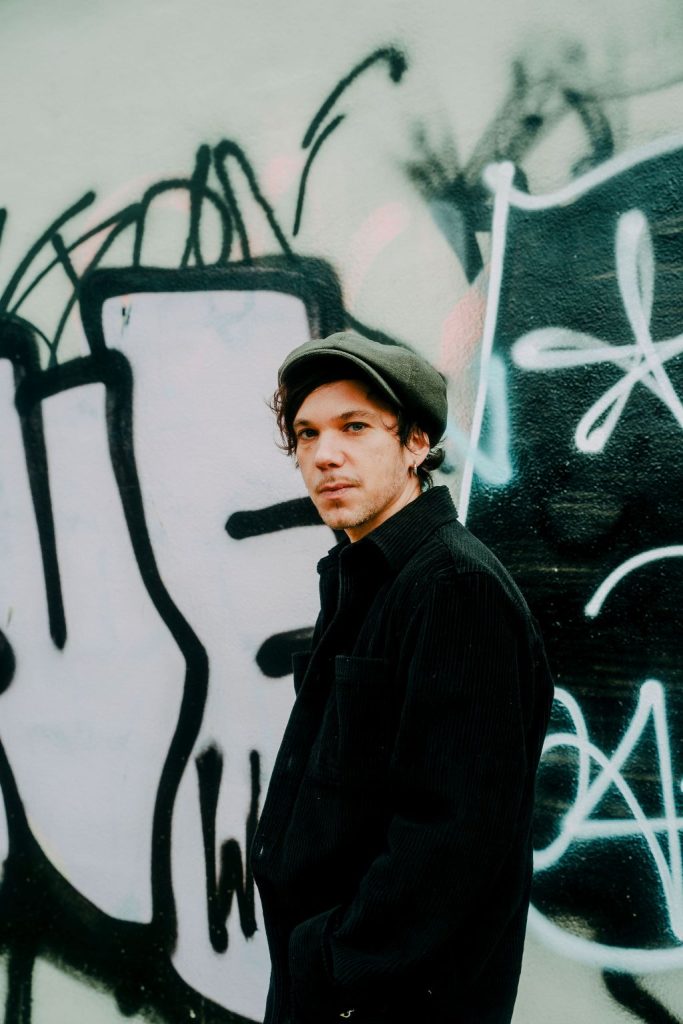
Did you already speak English at the time? When we hear you sing, the accent sounds completely natural.
My father was English-speaking, so I was immersed in the language from childhood. I didn’t speak it as fluently as I do today, but the sound of it was already there. Since that first trip, I’ve maintained a regular connection with the United States through friends, artists and encounters. I’ve gone back many times. All of that really changes your relationship to the language.
I was 20 or 21. I set out on the blues trail: New York, Chicago, Nashville, Memphis, New Orleans… In Memphis, I went to see Al Green at his church. That trip is also where my stage name was born: a musician nicknamed me “The Young Old.” I kept the initials, T.Y.O., which became Tiwayo.
Tiwayo
How do you get from those formative travels to a debut album, ″The Gipsy Soul Of…″, on Blue Note?
It was a whole process, what in France we call “development,” a word I don’t like very much, but one that describes a reality. I was playing in Paris and the surrounding area, learning my craft. At some point, I had enough songs that felt strong enough to release. That was around the time the Black Keys had just put out ″Brothers″, an album that made a deep impression on me. I dreamed of working with an American producer. I contacted Mark Neill (1), who had worked on that record, sent him demos, and he responded with genuine enthusiasm. I went to Georgia for a month to record that first album. When I came back, we shopped it around to labels, and I signed with Blue Note France. That opened some wonderful doors for me, including opening slots for Marcus Miller and Norah Jones, and tours across Europe.
Despite those opportunities, that period seems to have been complicated.
Yes, because this profession is precarious by nature. Each album corresponds to a different moment in life and, each time, the deck gets reshuffled. With the first album, we toured Europe a lot but played very little in France, which was frustrating for me. Then Covid arrived. The direction I was being offered at that point didn’t suit me: people wanted to steer me toward something more pop, whereas I wanted to explore my own world. I chose to leave the label. That separation, in the context of Covid, was very difficult, both professionally and personally.
Was ″Desert Dream″ born out of that context?
Yes. It was a studio album, a dreamlike record full of ideals. But after that period, I needed to take things back into my own hands. I also needed to more fully embrace my connection to soul and blues, music I know better today. Then my father passed away. That became one of the first inspirations for ″Outsider″. I needed to make a declaration, a statement.
This album sounds like a new beginning. What did you have in mind while writing it?
I wanted to come back with a record that sounded live, a soul-blues record that fully owned what I know how to do. I worked a lot on my voice, searching for my keys, my sound. Because I learned music empirically, there were things I had never tried before. Songs can begin as just guitar and voice, but I spend a lot of time on arrangements. I love that, especially in soul music. Listening to the records I love — deep-soul albums, Stax and Hi records — I realized I was missing one essential piece: a producer.
That producer would be Adrian Quesada, of Black Pumas. What role did he play?
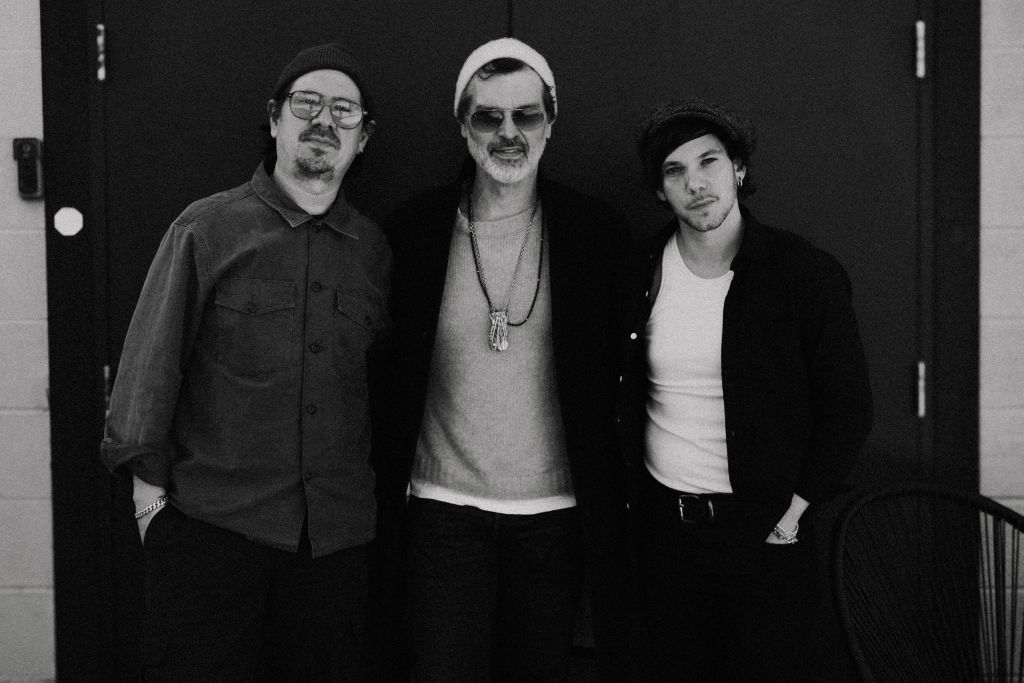
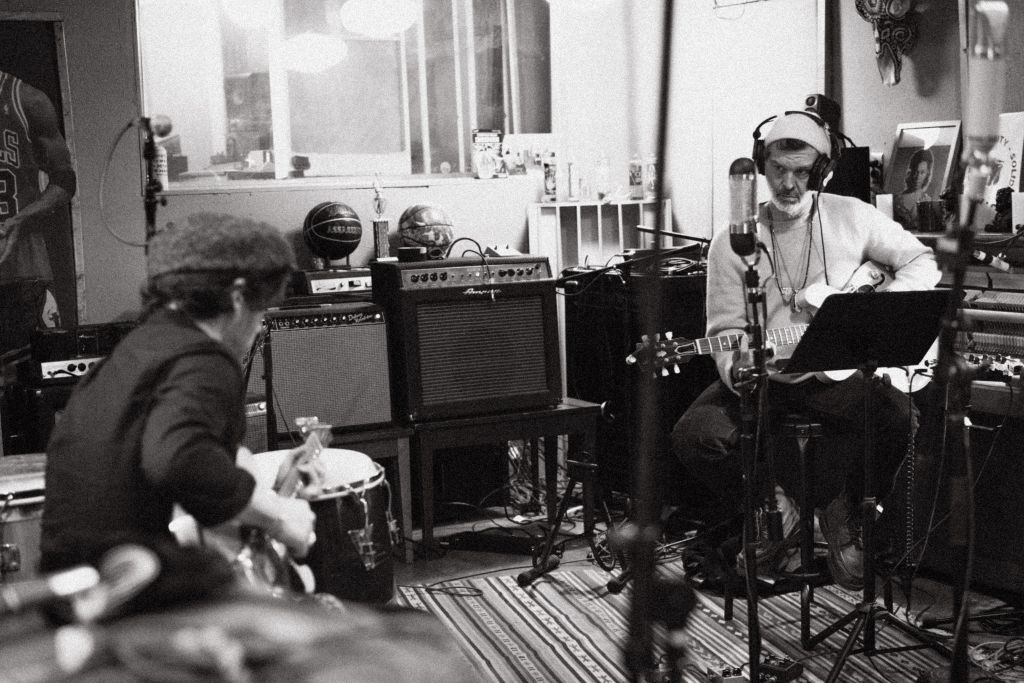
He brought my sonic ambition to life. I came in with highly arranged demos; the album was already there as a whole. But soul is a sound. And that sound comes first and foremost from the musicians. Adrian assembled an exceptional team. We recorded live, all in the same room: bass, drums, guitars, keyboards and my voice. The arrangements were clear, and we found each other very quickly. That, too, is the role of a producer: finding the right people, creating the right setting and making sure the chemistry can happen.
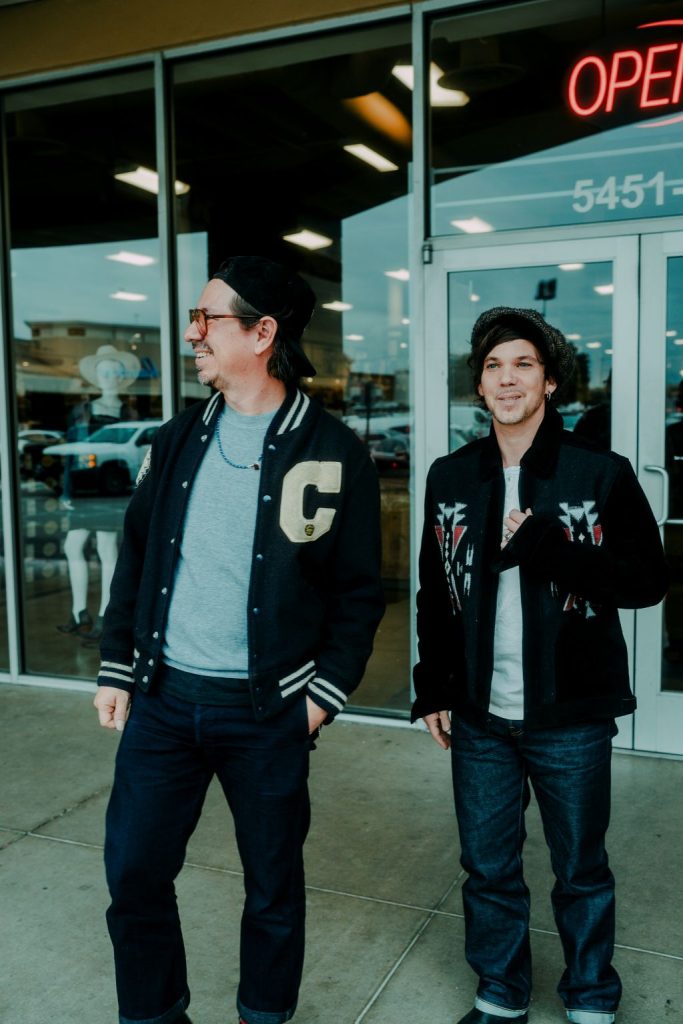
How did the Austin sessions unfold?
The album was recorded over two trips. On the first, I stayed in Austin for three weeks, with two full weeks in the studio. The first was focused on the band — bass, drums, guitars, keyboards — and the second on overdubs, strings, backing vocals and a few additional guitars. In ten days in the studio, everything was in the can. I felt an incredible sense of flow. For the first time, I felt things were going my way, that the work of the previous years was creating positive momentum. Communication with Adrian and the musicians felt natural. There was hardly any need to talk: the music was enough.
You then went back to Texas for the mixing.
Yes. We took a little distance from the rough mixes, then I went back to Austin to work with Adrian and Will Grantham, his sound engineer. We mixed together, around the table. The following week, I also recorded live sessions (2). Once again, there were new encounters. What mattered to me was that Adrian stay with me all the way through mastering. On an album like this, the sound chain matters from beginning to end: the songs, the musicians, the tracking, the mix and then the mastering, handled by JJ Golden in Los Angeles (3).
Doyle Bramhall II appears on several tracks. How did that connection come about?
I didn’t know him. I had told Adrian it would be amazing to have a great Austin blues guitarist on the album. We had mentioned a few names, including Doyle. Then, caught up in recording, we had almost forgotten that conversation. On the third day, Adrian said to me, “Doyle is in town, he likes what he’s heard, and he’s going to stop by Friday.” He arrived with his wife and a Gibson 335. My head was already in the clouds because everything was aligned artistically, but Doyle was the icing on the cake. He was supposed to play on one track, then he wanted to hear some of the others. In the end, he played on three: Daddy was born with the blues, Electric spanish and Loving man, which is still unreleased and due out later.
In ten days in the studio, everything was in the can. I felt an incredible sense of flow. For the first time, I felt things were going my way, that the work of the previous years was creating positive momentum.
Tiwayo
Daddy was born with the blues is a very personal song.
Yes, it’s dedicated to my father, who was one of the driving forces behind the album. There is an idea of transmission, and Doyle understands that perfectly: many musicians come to this music through their fathers, including him. I was very moved that he played on that song. He did two or three takes; it was fluid, magnificent. He has a very strong aura. We’ve stayed in touch.
There is also a beautiful duet with Kendra Morris, Unchained lovers. Did you know her?
No. I wanted a female voice on one of the songs. We sent it to her, she liked it and said yes. She recorded her parts in her own studio and then sent them to me. When I opened the session, everything was there, perfectly placed. All that was left was to do a bit of work around her voice and send the tracks back to Adrian. I later met her in New York around the album release. It was truly beautiful to meet her at home, in her own world.
There are more up-tempo tracks on this record than on your first two efforts. Was that deliberate?
Yes. ″Desert Dream″ was very atmospheric, almost in a world of its own. Here, I leaned more into punchier grooves. But songwriting matters a lot to me. Even in a funky track, I like the writing to come through. Making funky music purely for the pleasure of the groove — some people do that very well; I try to find the balance. And those faster songs feel good onstage. I was very sad to be cut off from performing with the second album because of Covid.
There’s a sense that ″Outsider″ is both a third album and a new first record.
That’s how it feels to me. There’s a sense of a new beginning, while still maintaining a real lineage with the first two records. Each album corresponds to a moment in life. On ″Outsider″, I wanted to go deeper into my understanding of this music, to look for where the magic lies in the albums I love. Maybe there is one constant: a form of sincerity. I really love George Jackson, a Memphis artist, for the way he describes everyday things, the reality of ordinary people. I recognize myself deeply in that. What you hear in my music as melancholy, or as an underlying sadness, may come from that way of writing songs, which is closely tied to Memphis soul.
Have you already had a chance to test the new songs in front of an audience?
Yes, and they work really well. I signed with very good people, including Fabien Cartel, a booking agent who knows and deeply loves this music. I’m now connecting with the people who make this kind of music happen in France, and that makes me extremely happy. I’ve had some great opening slots, notably for Robert Finley and Cedric Burnside. We started playing dates with the band, including a release show at the New Morning. I want to develop this album live throughout 2026, and hopefully into 2027 as well.
Do the songs evolve through contact with the stage?
Yes, of course. Sometimes you have to reduce them to more compact forms, but I think people appreciate the raw side of my shows, that sincerity. I’ve found very good musicians in France, musicians who love this music and know it well. We’re really having a blast. I’ve also incorporated covers, which I hadn’t done much before — for example, a song in the spirit of Hi Records. I’m giving that more room now.
Are you already thinking about the next album?
I want to, ideas are coming to me, but I don’t yet know what to do with them. Right now, what I need most is to take ″Outsider″ to the stage. I’d like to bring it to the United States, to see this story through, even though it isn’t simple logistically or financially. There are also things to do in Europe: Spain, England, France. For the United States, you have to put together a case, get the right visa and find the right partners. I’d like to do a run through the South, maybe Memphis. But the priority remains to keep this record alive wherever possible.
Interview conducted by Ulrick Parfum on July 31, 2026
Opening photo : © Isak Kotecki
(1) American producer and advocate for Southern music, active for about thirty years and best known for producing ″Brothers″ in 2010, the album that brought the Black Keys international fame and was recorded at Muscle Shoals Sound Studio.
(2) Live at Electric Deluxe Rec, available on YouTube, where Tiwayo performs I’ve got to travel alone and Up for soul live, accompanied, among others, by Adrian Quesada on guitar. Tiwayo – « I’ve got to Travel Alone » // Live at Electric Deluxe Rec – YouTube
(3) Sound engineer working for Golden Mastering, a California-based company whose highly diverse catalogue includes albums by Sharon Jones, James Hunter, Antibalas and Chris Robinson of the Black Crowes.